Executive Summary
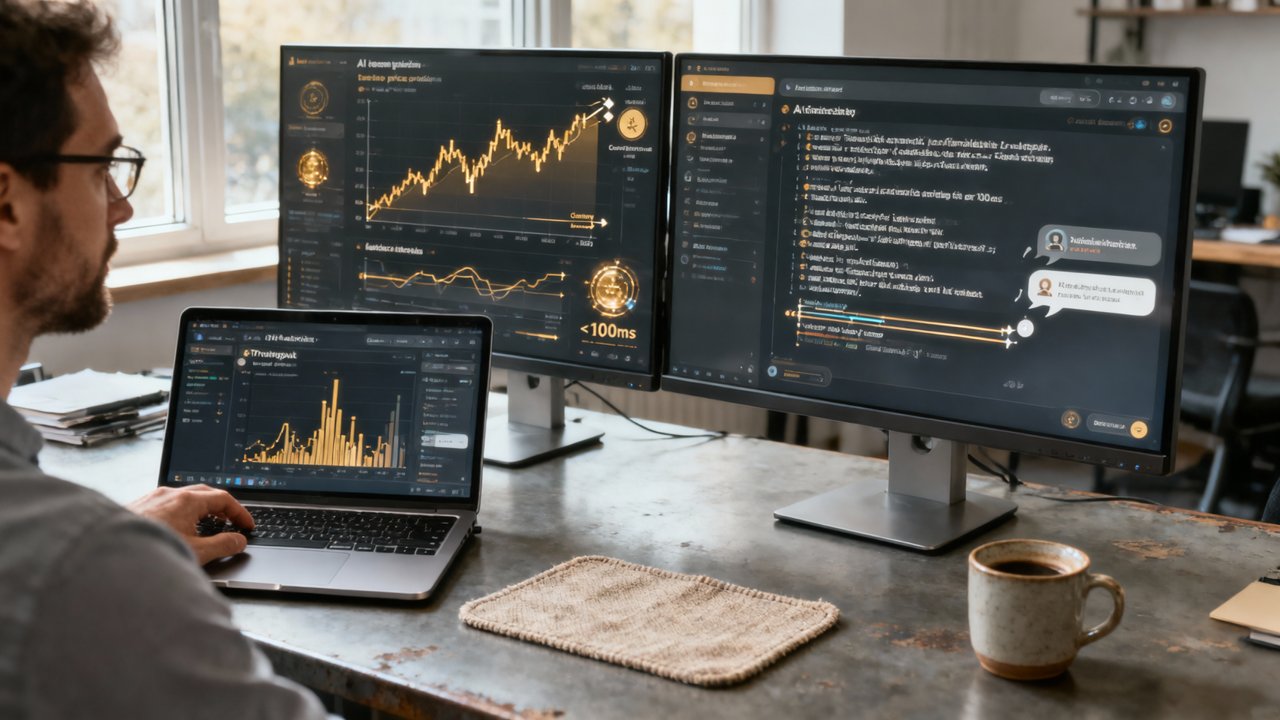
On March 16, 2026, Chinese tech media outlet Qbitai published a detailed analysis of MiroMind’s latest model release — MiroThinker-1.7 and MiroThinker-H1 — under the headline “不卷速度卷验证” (roughly: “Not competing on speed, competing on verification”). The piece centered on a striking demonstration: MiroThinker predicted the gold price (XAU/USD) for February 25, 2026, fifteen days in advance, with only a 0.08% error margin. The model forecast $5,185/oz; Fortune quoted the actual price at $5,181/oz, and 150 Currency quoted $5,185.89/oz. This single data point encapsulates MiroMind’s entire strategic thesis — that in a market obsessed with response latency, the real competitive frontier is verifiable accuracy over extended time horizons.
This report analyzes why this development matters, what has changed in MiroMind’s technical architecture, how it positions against competitors, and what practical implications it carries for AI tool buyers and enterprise users in 2026.
Background: Who Is MiroMind and Why Does It Matter Now
MiroMind is a Singapore-headquartered AI research organization founded by Chen Tianqiao (陈天桥), the founder of Shengda Group (盛大集团), one of China’s pioneering internet gaming companies. The company’s stated mission is to build the world’s best “predictive large model” — a category it explicitly distinguishes from generative chatbots focused on text output (Qbitai).
Related: From Model to Agent: Equipping the Responses API with a Computer Environment
Chen Tianqiao’s involvement in frontier technology is not new. In 2016 — the same year Elon Musk co-founded Neuralink — Chen and his wife Luo Qianqian committed $1 billion to establish the Tianqiao and Chrissy Chen Institute (TCCI), described as the world’s largest private brain science research institution. His investment in Synchron, a US vascular brain-computer interface company, predated similar moves by Bill Gates and Jeff Bezos (investorscn.com).
MiroMind entered the AI model space with a clear differentiation strategy: memory-driven mechanisms designed for prediction and decision-making, not conversational generation. The company first gained significant attention in August 2025 when it topped the FutureX leaderboard — a dynamic real-time agent forecasting benchmark described by Elon Musk as “the best measure of intelligence” — for two consecutive weeks, accurately predicting ATP tennis rankings and cryptocurrency price ranges (investorscn.com).
The company’s trajectory since then has been rapid: MiroMind Open Deep Research (ODR) launched in mid-2025, followed by MiroThinker 1.0, MiroThinker 1.5 (January 2026), and now MiroThinker-1.7 and H1 (March 2026). Each release has maintained a “monthly update” cadence that is unusual for a research-oriented organization (eastmoney.com).
Related: Nvidia Bets $26 Billion on Open-Source AI to Fill the Gap OpenAI and Meta Left Behind
The Gold Price Prediction: What Actually Happened
The gold price prediction case is the centerpiece of the March 2026 coverage and deserves careful examination.
The Setup:
- Prediction date: February 10, 2026
- Question posed: What will the XAU/USD gold price be on February 25, 2026?
- Time horizon: 15 days forward
The Results:
| Source | Quoted Price (Feb 25, 2026) |
|---|---|
| MiroThinker Prediction | $5,185/oz |
| Fortune (spot reference) | $5,181/oz |
| 150 Currency | $5,185.89/oz |
| CME GCG26 (futures) | $5,206.40 |
The error against Fortune’s spot price was $4, or approximately 0.08%. Against 150 Currency’s quote, the model was essentially exact. The CME futures price diverged more significantly at $5,206.40, but futures pricing incorporates carry costs and forward premiums that differ from spot references (miromind.ai).
This is not a trivial result. Gold price forecasting is notoriously difficult due to its sensitivity to geopolitical events, US dollar movements, Federal Reserve policy signals, inflation expectations, and safe-haven demand dynamics. Academic and commercial forecasting models routinely produce errors of 1–5% over 15-day horizons. A 0.08% error, if reproducible, would represent a meaningful capability advance.
The Qbitai article also documented MiroThinker’s performance on the F1 Shanghai Grand Prix, where the model was tested at three time points — 2 hours before the race, 1 hour into the race, and 30 minutes before the finish. By the final checkpoint, MiroThinker’s predicted finishing order was completely consistent with the actual result. Notably, it was the only model among those tested (ChatGPT, Gemini, DeepSeek, MiroThinker) to factor in real-time weather conditions in its pre-race analysis (Qbitai).
Related: ChatGPT’s Slipping Dominance: A Comprehensive Market Analysis of the AI Chatbot Landscape in 2026
What Changed: MiroThinker-1.7’s Technical Architecture
The performance gains in MiroThinker-1.7 are not the result of simply scaling up parameters. MiroMind has introduced two specific technical innovations that distinguish this release from both its predecessors and from the broader industry approach.
Upgraded Agent-Native Training
The industry standard for improving reasoning depth is to extend chain-of-thought (CoT) computation time through reinforcement learning. This approach works well for mathematics and coding but has a fundamental flaw: if each individual decision step is low quality, more interaction steps simply amplify low-quality decisions.
MiroMind’s response is to focus on what they call “agent-native competence” — improving the quality of each individual reasoning step rather than increasing the number of steps. This involves three components:
- More reliable planning: Decomposing problems correctly from the outset and selecting the right reasoning path
- More accurate reasoning: Each judgment step must withstand verification and reflection
- Long-range alignment: Maintaining alignment with the final objective throughout complex, multi-step tasks
To achieve this, MiroThinker-1.7 introduces a mid-training phase — an intermediate training stage using large-scale, high-quality task data specifically targeting planning, reasoning, and summarization capabilities. This builds stronger foundational agent capabilities including goal decomposition, appropriate tool selection, understanding tool outputs, and synthesizing final answers. The mid-training phase is then followed by SFT (Supervised Fine-Tuning), DPO (Direct Preference Optimization), and RL (Reinforcement Learning) to internalize these agent capabilities for stable long-horizon reasoning (Qbitai).
Verification-Centric Heavy Reasoning Mode
The second major innovation is a dual-layer verification system:
Local Verification: At each reasoning step, the system pauses for self-review. Only steps that pass local verification are allowed to continue exploration. This mechanism can break traditional AI probability bias — finding paths that may have lower instantaneous probability but are actually more correct.
Global Verification: After generating several complete reasoning paths, the model backtracks through the entire data chain to ensure the final answer is the most logically rigorous, not merely the most semantically fluent or superficially self-consistent.
The combination produces a counterintuitive result that MiroMind describes as a “promising phenomenon”: after introducing the verification mechanism, the number of interactive steps actually decreases substantially. The verifier acts as a filter, eliminating steps that produce no information gain and concentrating compute on interactions that genuinely advance the solution. Fewer steps do not contradict “heavy-duty” reasoning — they lay the groundwork for further scaling of effective interaction (miromind.ai).
This is a significant architectural insight. The industry assumption has been that more steps = better performance. MiroMind’s data suggests that verified, high-quality steps outperform a larger number of unverified steps — and do so with lower compute expenditure.
Benchmark Performance: Where MiroThinker-H1 Stands
MiroThinker-H1, the closed-source flagship model in the 1.7 series, claims state-of-the-art (SOTA) performance across multiple deep research benchmarks, surpassing Gemini-3.1-Pro, GPT-5.4-Thinking, and Claude-4.6-Opus:
| Benchmark | MiroThinker-H1 Score |
|---|---|
| BrowseComp (web retrieval) | 88.2% |
| BrowseComp-ZH (Chinese adaptation) | 84.4% |
| GAIA-Val-165 (validation set) | 88.5% |
| HLE-Text (Humanity’s Last Exam) | 47.7% |
For context, MiroThinker-1.5 (released January 2026) had already posted strong numbers: GAIA-Val-165 at 80.8% (vs. GPT-5-High’s 76.2%), BrowseComp-ZH at 71.5% (vs. GPT-5-High’s 65.0%), and HLE-Text at 39.2% (vs. GPT-5-High’s 32.1%) (unifuncs.com). The 1.7 series represents a substantial jump across all metrics in just two months.
The open-source MiroThinker-1.7 (235B) and the smaller MiroThinker-1.7-mini (30B) are positioned to balance efficiency and performance, continuing the lineage of MiroThinker-1.5’s 30B model which achieved performance comparable to 1T+ models at 1/20th the inference cost (tools-ai.online).
The MiroMind website also cites 99% cumulative accuracy on 300-step reasoning chains — a metric that speaks directly to the long-horizon task reliability that distinguishes MiroThinker from models optimized for single-turn responses (tools-ai.online).
Competitive Context: The “Slow but Right” Positioning
Against the Speed-First Paradigm
The dominant competitive dynamic in the LLM market in 2025–2026 has been latency reduction. OpenAI, Google, Anthropic, and Chinese competitors including ByteDance and Alibaba have all invested heavily in reducing time-to-first-token and overall response time. The implicit assumption is that users want instant answers.

MiroMind’s bet is the opposite. MiroThinker deliberately accepts 1–2 minute response times in exchange for higher accuracy and verifiable reasoning chains. The Qbitai article frames this as “慢下来、想更多” (slow down, think more) — a philosophy that prioritizes depth over immediacy (Qbitai).
This is not a niche position. For professional use cases — financial analysis, legal research, scientific investigation, engineering decisions — the cost of an incorrect answer vastly exceeds the cost of waiting an extra 90 seconds. MiroMind is explicitly targeting these high-stakes environments.
Against Open-Source Competitors
MiroThinker-1.5 and 1.7 are built on the Qwen3 model series from Alibaba, which provides a strong open-source foundation. The competitive comparison with DeepSeek is instructive: in the F1 prediction test, DeepSeek’s output focused only on historical driver performance and vehicle conditions, while MiroThinker incorporated real-time weather data, race strategy analysis, and iterative refinement across three time checkpoints (Qbitai).
Against UniFunc’s S2 deep search API — a direct commercial competitor in the Chinese market — MiroThinker’s open-source model requires self-deployment (via SGLang/vLLM or cloud services), while S2 offers plug-and-play API access. This “open-source vs. commercial” dynamic creates a bifurcated market: developers who want control and customization gravitate toward MiroThinker; enterprises wanting managed services may prefer S2 or similar offerings (unifuncs.com).
Against Western Frontier Models
The benchmark comparisons against GPT-5.4-Thinking, Gemini-3.1-Pro, and Claude-4.6-Opus are significant because these are the current generation of frontier closed-source models from the three dominant Western AI labs. MiroThinker-H1’s claimed superiority on BrowseComp (88.2% vs. implied competitor scores) and GAIA-Val (88.5%) positions it as a genuine challenger in the deep research agent category — not merely a cost-efficient alternative.
The tools-ai.online profile of MiroMind describes its architecture as a “Reasoning Operating System” with a 4-role verification kernel: Planner → Executor → ChainChecker → Verifier, with independent verification at every step before proceeding. This DAG-based architecture supports branching (parallel exploration), rollback (return to last valid state), and replanning — capabilities that go beyond what standard transformer inference pipelines offer (tools-ai.online).
Organizational Context: The Team Disruption and Recovery
Any analysis of MiroMind’s March 2026 position must acknowledge the significant organizational disruption that preceded it. In January 2026, Dai Jifeng (代季峰) — a Tsinghua University associate professor and the technical core of MiroMind since its founding — departed from his role as Technical Advisor. The separation was attributed primarily to compliance considerations: Chinese AI researchers working remotely for a Singapore-based company using US AI chips and compute faced legal risks under emerging US export control frameworks, specifically the Remote Access Security Act being advanced in the US Congress (eastmoney.com).
Dai Jifeng’s credentials were substantial: former Principal Researcher and Research Manager at Microsoft Research Asia (2014–2019), Executive Research Director at SenseTime (2019–2022), and lead developer of InternVL, one of the most influential open-source multimodal foundation models. His departure was described by insiders as “regrettable” given the rapid development pace at the time.
The fact that MiroThinker-1.7 was released just two months after this disruption — with benchmark scores that exceed the 1.5 series across all metrics — suggests that MiroMind’s organizational resilience is stronger than the January 2026 news implied. The simultaneous announcement of three world-class AI scientists joining the core team (杜少雷/Du Shaolei, 安波/An Bo, and 杨凯峪/Yang Kaiyu, all specialists in model reasoning and decision-making) signals a deliberate rebuilding of technical leadership (Qbitai).
Chen Tianqiao’s broader philosophy — described in his essay “Welcoming the Age of Exploration in Human Evolution” — emphasizes the need for AI systems that are “measurable, auditable, and accountable.” This aligns directly with MiroThinker’s verification-centric architecture and suggests the technical direction is driven by founder conviction, not just competitive positioning (eastmoney.com).
Buyer Relevance: Who Should Care and Why
Financial Professionals
The gold price prediction case is the most directly relevant demonstration for financial analysts, portfolio managers, and quantitative researchers. A 0.08% error on a 15-day forward price prediction for a highly volatile commodity is a result that would attract serious attention from any systematic trading desk. The key question — which MiroMind has not yet fully answered publicly — is whether this accuracy is reproducible across multiple predictions and asset classes, or whether it represents a single favorable outcome.
For financial professionals evaluating AI tools in 2026, MiroMind’s approach offers something qualitatively different from standard LLM-based financial analysis tools: a verifiable reasoning chain that shows exactly how the prediction was derived, making it auditable and defensible to compliance teams and risk managers.
Scientific Researchers
The HLE-Text (Humanity’s Last Exam) score of 47.7% is particularly notable for scientific research applications. HLE is designed to test the absolute frontier of AI capability on expert-level questions across science, mathematics, and humanities. A score approaching 50% represents genuine expert-level performance on questions that most humans with domain expertise would struggle to answer correctly.
For researchers in fields like drug discovery, materials science, or climate modeling — where complex multi-step reasoning over large bodies of literature is routine — MiroThinker’s combination of deep research capability and verification mechanisms addresses a real pain point: the tendency of standard LLMs to produce confident but incorrect answers in specialized domains.
Enterprise AI Buyers
The 2026 AI market research tools landscape, as documented by Ditto’s buyer’s guide, shows a proliferation of specialized tools across different research methodologies (askditto.io). MiroMind occupies a distinct position in this landscape: it is not a survey tool, not a synthetic respondent generator, and not a general-purpose chatbot. It is positioned as infrastructure for high-stakes analytical tasks where the cost of error is high.
For enterprise buyers, the practical implications are:
- Compliance-friendly outputs: Every reasoning step is human-readable, auditable, and replayable. This matters enormously for regulated industries.
- Reduced hallucination risk: The local and global verification mechanisms specifically target the failure mode that makes standard LLMs unreliable for professional use.
- Deployment flexibility: The open-source 235B and 30B models can be deployed on-premises via SGLang or vLLM, addressing data sovereignty concerns.
- Cost efficiency: The 30B model achieves 1T+ model performance at 1/20th the inference cost — a compelling economic argument for organizations running high-volume analytical workloads.
Developers and AI Tool Builders
For developers building on top of AI infrastructure, MiroThinker’s open-source availability on GitHub (github.com/MiroMindAI/MiroThinker) and HuggingFace (huggingface.co/collections/miromind-ai/mirothinker-17) provides access to a model architecture that has demonstrated genuine advances in agentic reasoning. The 256K context window and support for up to 400 tool calls per task (documented for MiroThinker-1.5) make it suitable for complex multi-step workflows that exceed the practical limits of standard models.
Practical Implications for AI Tool Users
The “Slow but Right” Trade-off Is Real and Intentional
Users evaluating MiroThinker need to understand that the 1–2 minute response time is not a bug or a temporary limitation — it is a deliberate architectural choice. The verification mechanisms that produce high accuracy require time. For use cases where speed is paramount (customer service, real-time content generation, quick Q&A), MiroThinker is not the right tool. For use cases where accuracy is paramount (financial forecasting, legal research, scientific analysis, strategic planning), the wait time is a reasonable trade-off.
The One-Click Report Generation Feature
The Qbitai article highlights a practical UX feature: MiroThinker supports one-click generation of formatted web reports from its analysis outputs. For knowledge workers who need to share research findings with colleagues or clients, this reduces the friction between AI-generated analysis and professional-grade deliverables — a meaningful productivity gain that goes beyond raw model capability.
Mobile Accessibility
MiroMind launched iOS and Android apps in March 2026, bringing the MiroThinker reasoning system to mobile devices. This expands the practical use context beyond desktop research workflows to field-based decision-making scenarios (miromind.ai).
The Pro Mode Distinction
The interface includes a “Pro” button that activates a larger model with deeper reasoning at the cost of longer processing time. This tiered approach allows users to calibrate the speed/accuracy trade-off based on task requirements — a sensible design choice that acknowledges not every query requires maximum reasoning depth.
Where This Fits in the Market: A Structural Analysis
The Emerging “Verifiable AI” Category
MiroMind’s positioning reflects a broader market trend that is becoming increasingly visible in 2026: the emergence of “verifiable AI” as a distinct product category. Standard LLMs generate outputs probabilistically; verifiable AI systems generate outputs with attached evidence chains that can be independently checked.
This distinction matters because enterprise adoption of AI has been constrained by the “hallucination problem” — the tendency of LLMs to produce confident, fluent, but factually incorrect outputs. Verifiable AI addresses this at the architectural level rather than through post-hoc fact-checking.
MiroMind is not alone in this space. The tools-ai.online description of MiroMind’s architecture — “replacing probabilistic generation with verifiable, deep-chain reasoning” — echoes themes present in other emerging systems, but MiroMind’s benchmark performance and real-world demonstrations (gold price prediction, F1 race prediction, FutureX leaderboard performance) provide concrete evidence of capability that most competitors lack (tools-ai.online).
The China-Singapore AI Corridor
MiroMind’s organizational structure — Singapore headquarters, global research team, Chinese technical talent —
Next Step
Use these pages to keep the decision moving:
- More in AI Chat — Keep researching the same category instead of stopping at one article.
- Open comparisons — Jump into direct matchups and trade-off pages.
- Open tool guides — Use the canonical decision pages for fit, pricing context, and alternatives in one place.